
Not for Trend Cycles: Finding Your People through Material Intelligence
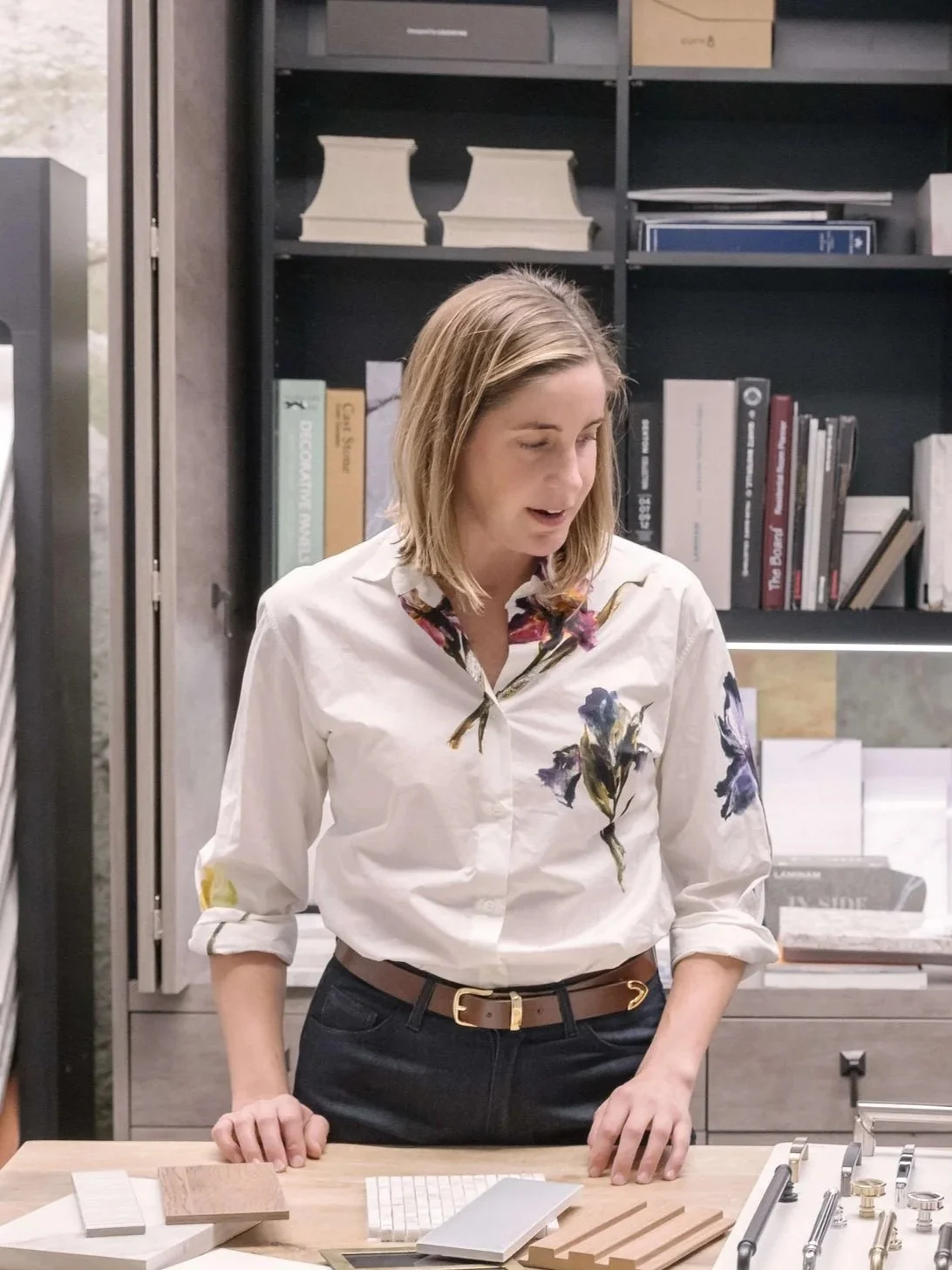
Walking the halls at High Point Market this year, I found myself in a conversation with a fellow designer who shared a sentiment that has become my North Star for the season:
“Don’t market more, matter more.”
It was a needed reminder. In an industry that often feels like it is shouting for visibility, the most powerful thing we can do as professionals is create something that actually carries weight. Something that matters.
For me, that shift starts with a different kind of conversation. It is about moving away from the "noise" of overproduced, overexposed trends and finding "our people."
When I talk about finding our people, I am talking about a specific subset of the design world. I am talking about the designers who are tired of textiles that look like everything else on the market. I am talking about the colleagues who value material intelligence over a passing aesthetic.
These are the designers who understand that time, labor, and lineage are what justify a cost, not a glossy marketing campaign. When we design with this mindset, the goal isn't just to source a product. The goal is for the work to feel collected, not sourced. It is a subtle distinction, but it is one the brain recognizes immediately. It is the difference between a room that is "finished" and a room that is grounded.
Material Intelligence: A Sharper Edge for Design
We’ve all seen the buzzwords. Handcrafted. Artisan-made. Supporting tradition.
They are beautiful sentiments, but in the current design landscape, they’ve started to lose their edge. They have become so overused, appearing on everything from heritage textiles to mass-produced furniture, that they’ve shifted from being a mark of quality to a mere explanation.
I believe we need a sharper way to talk about craft. We need to move away from the sentimentality of the "story" and move toward the material intelligence of the piece. A story is an invitation, but a filter is a standard.
Instead of saying, "we work with artisans in Guatemala using traditional techniques," we should be speaking to the designer’s own values: "For those who care where something comes from and how it was constructed."
It’s a subtle but powerful shift. One is an explanation; the other is a resonance.
At RB Curated, we have learned that our standards should do the filtering for us. We don’t need to use the word "luxury" if we can show it through restraint and specificity. When we speak about a textile dyed with cochineal or hand-loomed in San Juan La Laguna, we don’t over-explain the history. We reference it with confidence.
The right person, our person, already knows. Or, more importantly, they want to.
We are finding that our peers are looking for pieces they can build a room around. Pieces that "hold their ground" even in a minimal space. You don’t specify a textile like this because it’s convenient or because it fits a trend cycle. You specify it because it matters. You specify it because, in a room that risks feeling too finished or "sourced," these pieces bring it back to something real. Something that carries the factual weight of weeks of human labor.
This is what it means to design with memory. It isn't for those looking for something easy to replicate. It’s for those who understand that true value is found in the things that cannot be mimicked.
Handcrafted as a Strategy, Not a Style
In a world where style can be generated with a click, and textures can be mimicked by an algorithm, the handcrafted narrative is no longer just a design choice; it is a professional strategy. It is how we protect the integrity of our projects.
We see this most clearly when we move beyond the "source" and into the "create."
Take our project in Chevy Chase, MD, "Art, Music, & Family." This was a home designed for a modern family aesthetic, transitioning traditional architecture into a space that could handle pool days, dog-approved furniture, and a deep devotion to art and music.
In this project, the custom millwork was about more than just maximizing square footage; it was about carving out the architecture for the life lived there. It was about creating quiet nooks for reading and making space for a guitar chair in every room.
These are the intentional details that ensure a home feels personalized to the family’s devotion to art and music. Whether it is a bespoke cabinet or a textile from RB Curated, these objects provide a factual weight and a sense of origin that mass-produced items simply cannot carry. They reflect the perspective of the people inside, turning a house into a sanctuary that finally feels honest.
At RBI, we don’t see "handmade" as an aesthetic style that can be turned on or off. We see it as a frequency. Most of what we do is custom, and the vast majority of it is constructed by the human hand.
When a room risks feeling too "finished" or sterile, it is these handcrafted pieces that bring it back to something real. They provide a factual weight and a sense of origin that mass-produced items simply cannot carry.
The Business of Craft: Educating the Client
One of the most frequent questions I hear from fellow designers is: How do you get the client to buy into the investment?
It comes down to shifting the narrative from "price" to "permanence." In an era of disposable decor, we are offering our clients an alternative to the "fast furniture" cycle. When we specify a piece with high material intelligence, we are offering them an asset that will actually deepen in character over time.
As designers, we have to be the bridge between the maker and the end-user. We have to teach our clients how to "read" a space; how to value the irregularity of a hand-loomed weave or the way natural light hits a hand-planed surface. When the client understands that the "irregularity" is actually the evidence of human skill, the cost is no longer a hurdle; it is a justification.
A Designer’s Checklist for Material Intelligence
To help my peers identify and specify pieces that carry this factual weight, I’ve put together a baseline checklist we use at RBI and RB Curated when evaluating new collections:
The Mark of the Hand: Are there subtle irregularities in the weave or the finish? These are not defects; they are the "frequency" of human labor that machines cannot mimic.
Lineage and Origin: Can the vendor tell you who made the piece and how long it took? True material intelligence is grounded in facts, not just feelings.
The Aging Process: How will this material look in ten years? Hand-dyed natural fibers and solid wood finishes gain character over time. If it’s designed to be replaced, it’s not "curated."
Placement Intent: Does the piece have the scale and restraint to "hold its ground" without being surrounded by filler decor?
Giving Designers the Tools to Sell
During my time at High Point Market, I was inspired by the way certain brands emphasize giving designers the tools to explain to their clients why a piece matters.
It isn’t enough to have a beautiful product; as professionals, we need to provide the "why."
This is our focus for the coming season at RB Curated. We are creating assets that focus on placement logic and emotional reasoning. We want to help you move away from sentimentality and toward the factual weight of the craft:
“Best used where texture needs to carry the room.”
“Adds variation without introducing pattern.”
“Each piece reflects weeks of work on a backstrap loom, a depth that cannot be replicated.”
We want to give you the language to tell your clients: “You don’t specify this because it’s convenient. You specify it because it matters.”
Because when we choose to "matter more," we aren't just designing rooms. We are building a legacy of craft that will outlast any trend cycle.
If you are a designer looking to integrate more intentional, handcrafted pieces into your work, I invite you to join our community through the RB Curated Trade Program. Let’s stop creating noise, and start creating spaces that hold their ground.