
The Making of a Table
A Look into my design for the Naples Tables Event in 2025
Last February, I had the opportunity to design a table for Naples Tables, a fundraising event benefiting The League Club in Naples, Florida. The League Club is a powerhouse of community support, driven by a mission to strengthen neighborhoods and improve lives. With 600 dedicated volunteers, they've made an incredible impact, awarding more than $8 million in grants to local nonprofits focused on the environment, education, and children and families.
I was thrilled to support such an incredible organization. When I began brainstorming the design, I knew exactly where to turn for inspiration: the artisans of Guatemala and Mexico.
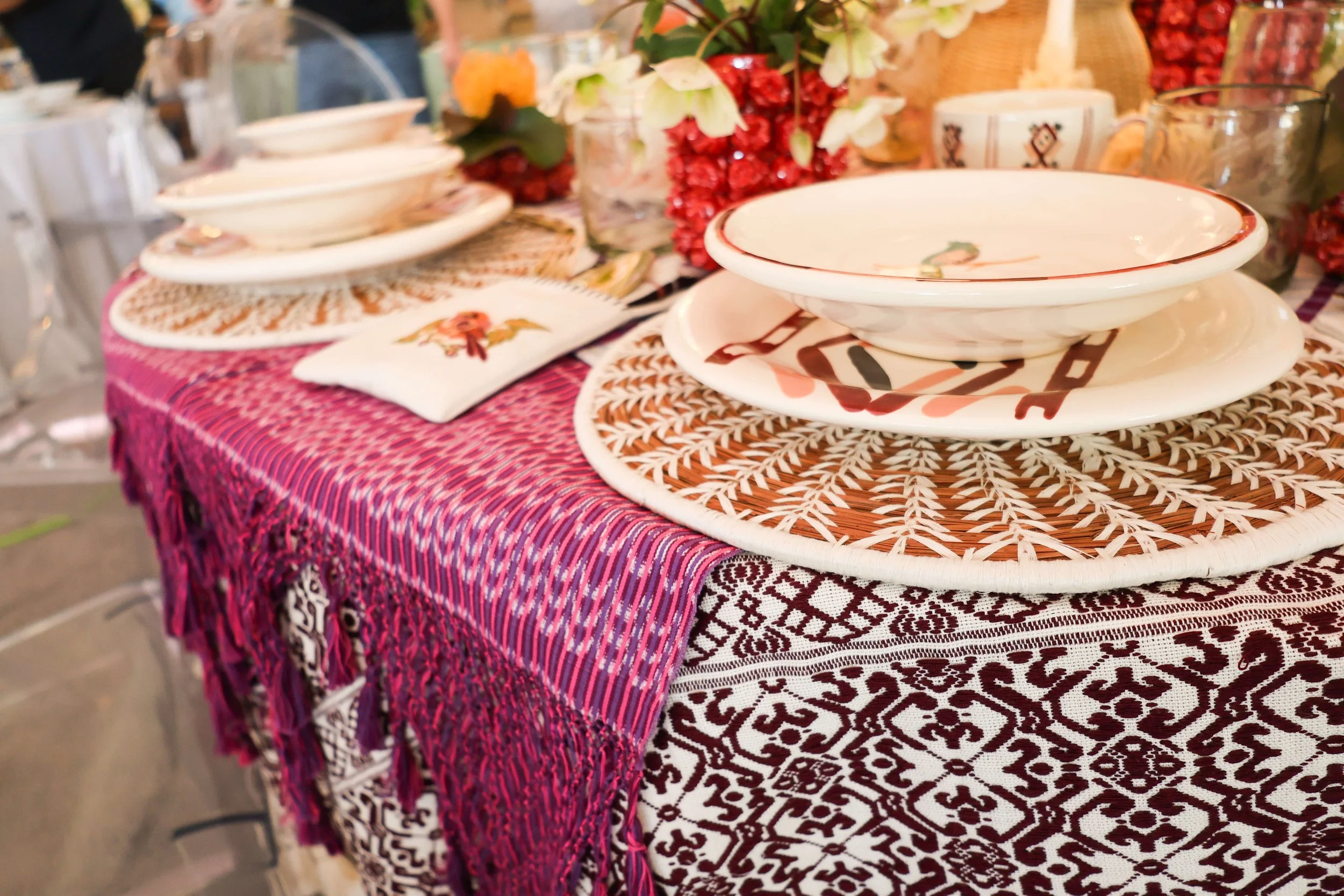

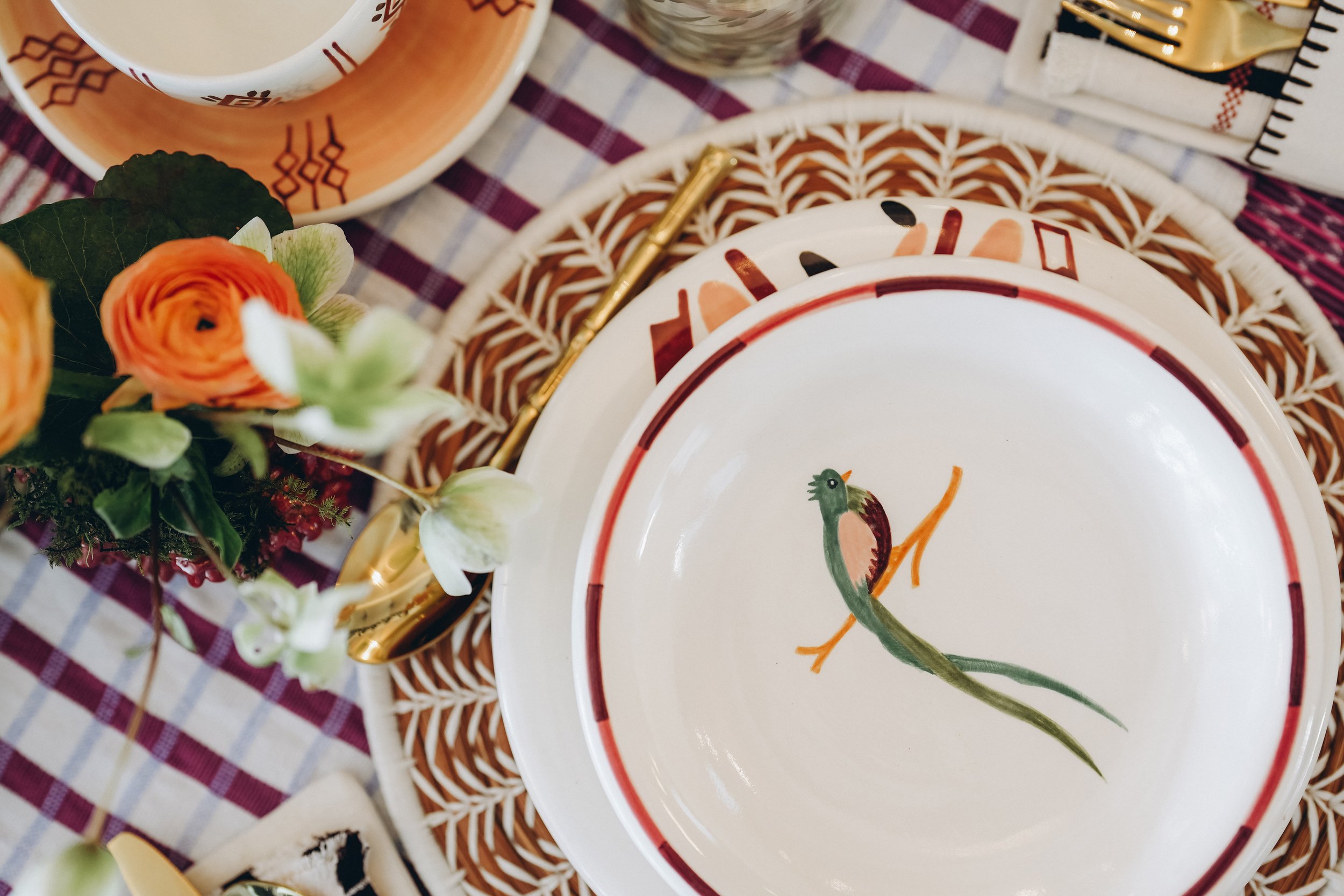
Over the years, first as an interior designer and now through RB Curated, I've had the privilege of working with some of the most incredible artists in the world. These are artisans dedicated to quality, craftsmanship, and preserving cultural heritage. So when it came time to create last year's table, finding inspiration wasn't difficult.
The piece that sparked the entire design was a vintage huipil I purchased at a market during one of my visits to Guatemala. It comes from the community of Santiago Atitlán and features exquisite hand embroidery around the neckline, layered over a grid pattern traditional to the town. That combination of structure and detail became the foundation for everything that followed.
The artisans who create these pieces aren't just preserving a craft. They're sustaining their community. Let me introduce you to one of the cooperatives I work with through RB Curated:
Cooperative Cojolya of Santiago Atitlán, Sololá
Founded in 1996 in the aftermath of the Guatemalan Civil War, Cojolya emerged as a response to the scarcity of work in Santiago Atitlán. Its mission is to provide fair, dignified employment to local artisans while also offering vital social support within the community. Today, Cojolya serves up to 40 artisans and their families, extending assistance in both healthcare and education.
Featured product:
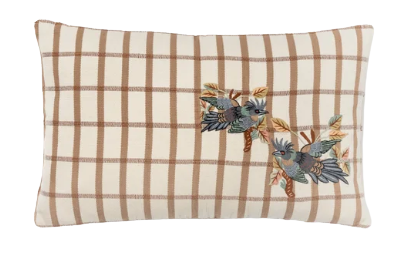
Pájaro Lumbar Pillow
Here, we highlight a precious pair of birds, a motif carefully brought to life by master embroidery artisans. With over 700 species of birds found in Guatemala, these embroidered designs reflect the country’s deep connection to nature, where birds symbolize freedom, beauty, and spiritual significance. A celebration of heritage and craftsmanship, this piece captures the spirit of a weaving tradition as vibrant and enduring as the landscape itself.
PRODUCTION TIME: 30 Hours
Designing with Layers of Texture and Depth
As with all of my design concepts through our Interior Design services, I begin by thinking about layers and layers of texture, but also layers of depth and meaning. Each element should complement the next while adding dimension to the overall composition.
Building the Foundation: Table Linens
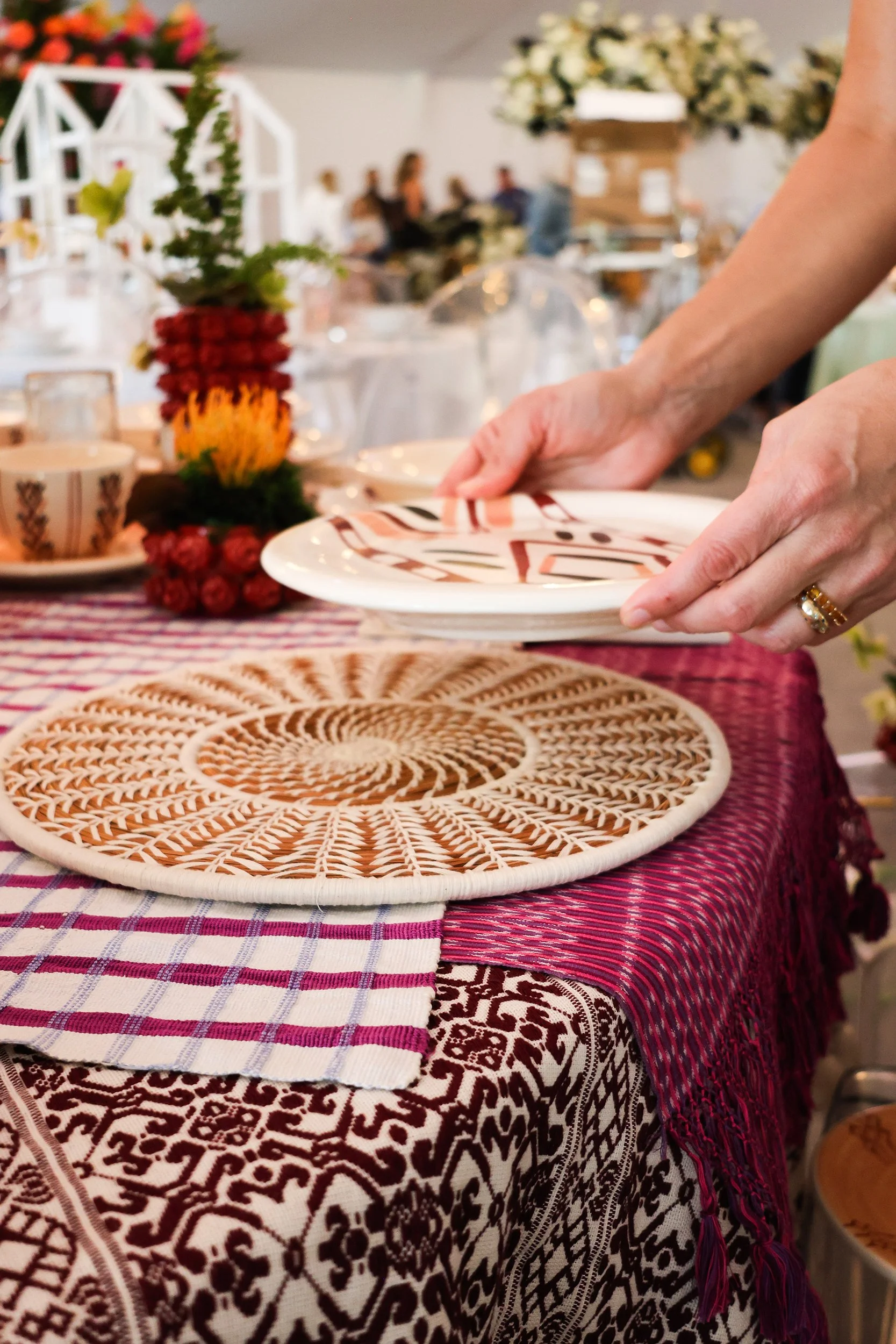
I started with the tablecloths, using the colors of the Santiago huipil as inspiration. For the base, I chose fabric from our Falseria collection, a decision rooted in both aesthetics and the extraordinary craft behind it.
The technique used to create this fabric is worth understanding…
The Falsería Technique
This is one of Guatemala's rarest and most intricate handweaving techniques. It is a specialized, time-intensive method used by master artisans to create complex, often raised or textured, patterns on textiles.
The process, designed to replicate the intricate motifs of traditional backstrap weaving on a larger scale, requires the precise coordination of 29 heddles. For each line of pattern, the weaver must lift a specific combination of ropes by hand, guided by a graph-paper pattern meticulously drafted for each design. This labor-intensive method takes up to eight times longer than weaving a solid fabric.
Featured Product:
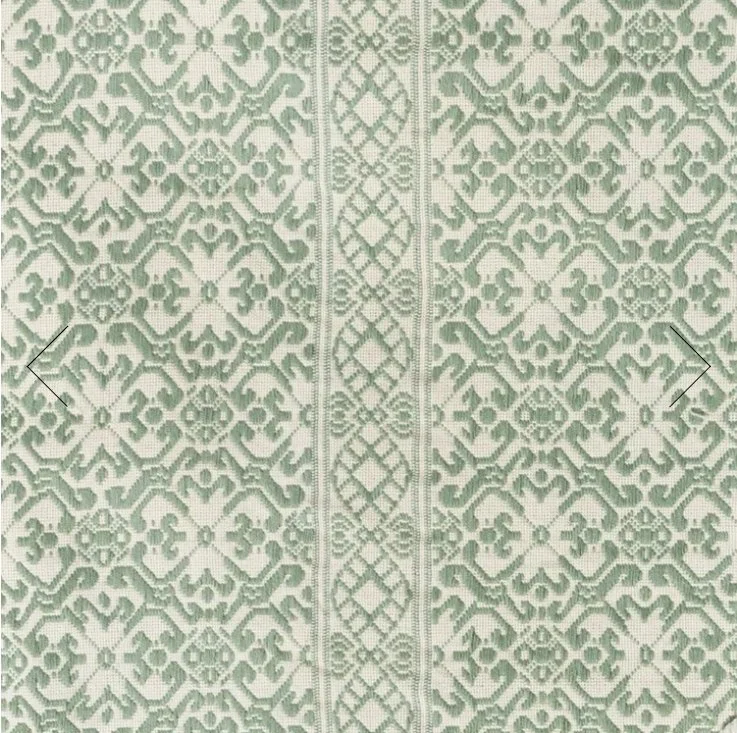
Falseria Fabric By The Yard
Handwoven by Alirio and his team on a footloom using the rare falsería technique, this one-of-a-kind fabric is a masterwork of craftsmanship.
A blend of heritage, precision, and elegance, it honors tradition while offering enduring beauty for modern homes.
PRODUCTION TIME: 8 Hours Per Yard
To add more depth, I layered a handwoven Mexican ikat textile between two layers of handwoven Guatemalan fabric. This brought complexity to the table while serving as an ode to another place that continues to fill my heart, both as a designer and as a connector of cultural storytelling and craft.
Dishware Rooted in Textile Tradition
For the next layer of the table, we partnered with Topis Ceramics, a workshop of expert ceramic painters located in Antigua, Guatemala, to create the dishware. We drew inspiration from the traditional textiles of Nahuala and shared these designs with the ceramic painters, who brought them to life on each plate through meticulously handpainting each detail.
The textiles that inspired these plates carry their own story of craftsmanship…
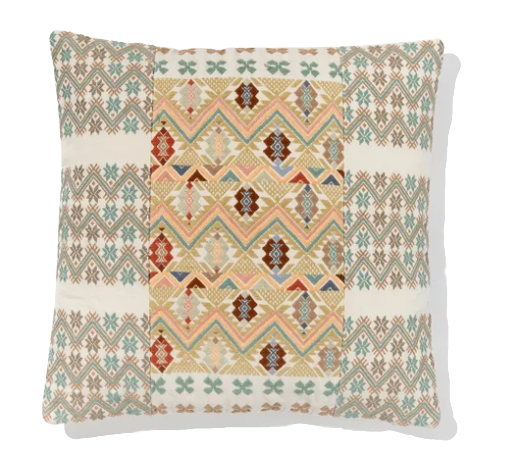
Mariposa Throw Pillow
This pillow is thoughtfully constructed from three individually woven panels, joined together in the same tradition as the huipil, the handwoven blouse worn by Indigenous Maya women in Guatemala. Like the huipil, each panel is created on a backstrap loom, a technique deeply rooted in ancestral knowledge and cultural identity.
PRODUCTION TIME: 32 Hours
Our favorite piece features the Guatemalan national bird, the quetzal. I loved this plate so much that it inspired me to design an entire line of hand-painted tiles featuring birds found throughout Guatemala.
These custom tiles are coming together beautifully, and I can't wait to share them! You can see the backsplash we're creating on the RBI Instagram page.
We're also planning a future launch of the dishware line used for our Naples Table event last year. One of the cornerstones of our brand is ensuring that artisans' design knowledge is recognized and fairly valued, which is why a percentage of the profits will be used to compensate the backstrap weavers in Nahuala for the designs that inspired it all.
Stay tuned for more details on both the tiles and dishware.
Natural Materials and Cross-Cultural Details
The dinner plates rest on pine needle woven chargers, also made in Guatemala. These chargers are created by women who collect fallen pine needles from nearby forests, then carefully coil and stitch them into circular patterns using cotton thread. There's something beautifully sustainable and meditative about this practice, transforming what the forest naturally sheds into something functional and elegant.
To complement this natural fiber texture, I sourced the woven centerpiece from LORDEG in Mexico City: a woven piece with an organic, almost whimsical shape that draws the eye upward and anchors the entire tablescape. It has that sculptural quality I love, something that feels both grounded and alive.
Surrounding the centerpiece are ceramic pineapples made in Michoacán, Mexico. These weren't just a decorative choice, they were one of many signs nudging me that I needed to visit this magical region. (Spoiler: I did, and it was extraordinary.)
The details continued with delicate etched glassware, also from Mexico, and floral candles created by a master artisan in Oaxaca. Each piece brought its own story, its own sense of place. Together, they created a conversation across borders. Guatemala and Mexico, linked by craft, tradition, and a shared reverence for beauty made by hand.
Lighting and Finishing Touches
No table is complete without the right lighting, and for this one, I commissioned two custom lamps that became some of my favorite elements of the entire design. The lampshades are covered in fabric handwoven in Cobán using the incredibly rare Pikbil weaving technique, a method so fine and delicate that it allows soft, diffused light to pass through the weave itself. When the lamps are lit, you can actually see the intricacy of the textile, each thread illuminated. It's a quiet showcase of extraordinary skill.
For the final layer, I wanted to circle back to where it all began: that vintage huipil from Santiago Atitlán. The napkins were woven on the backstrap loom by artisans in the same community, featuring the traditional grid pattern that first captured my attention. And for the napkin holders, I asked the embroiderers to create something special with intricate birds, rendered with the kind of detail that takes not just hours, but years of practice to master.
It felt right to bookend the table this way. To start with inspiration from Santiago Atitlán and end there too, honoring the hands and heritage that set everything in motion.

A Table Meant to Spark Conversation
For this tabletop design, I wanted to create a space that celebrates the artistry and complexity of Guatemalan and Mexican design. Every piece has a story, and together they create a setting meant to invite conversation, curiosity, and appreciation for the layers behind each handmade object.
Want to see more of the table in detail? Visit our Naples Tables Portfolio Project → to view the full collection of images and get a closer look at each handcrafted element.
And here's something exciting: we're thrilled to be back at Naples Tables this year! For the 2026 event, we're contributing a 2-hour design consultation. It’s an opportunity to work together on bringing meaningful, artisan-made design into your own space. If you're attending or know someone who is, I'd love to connect.
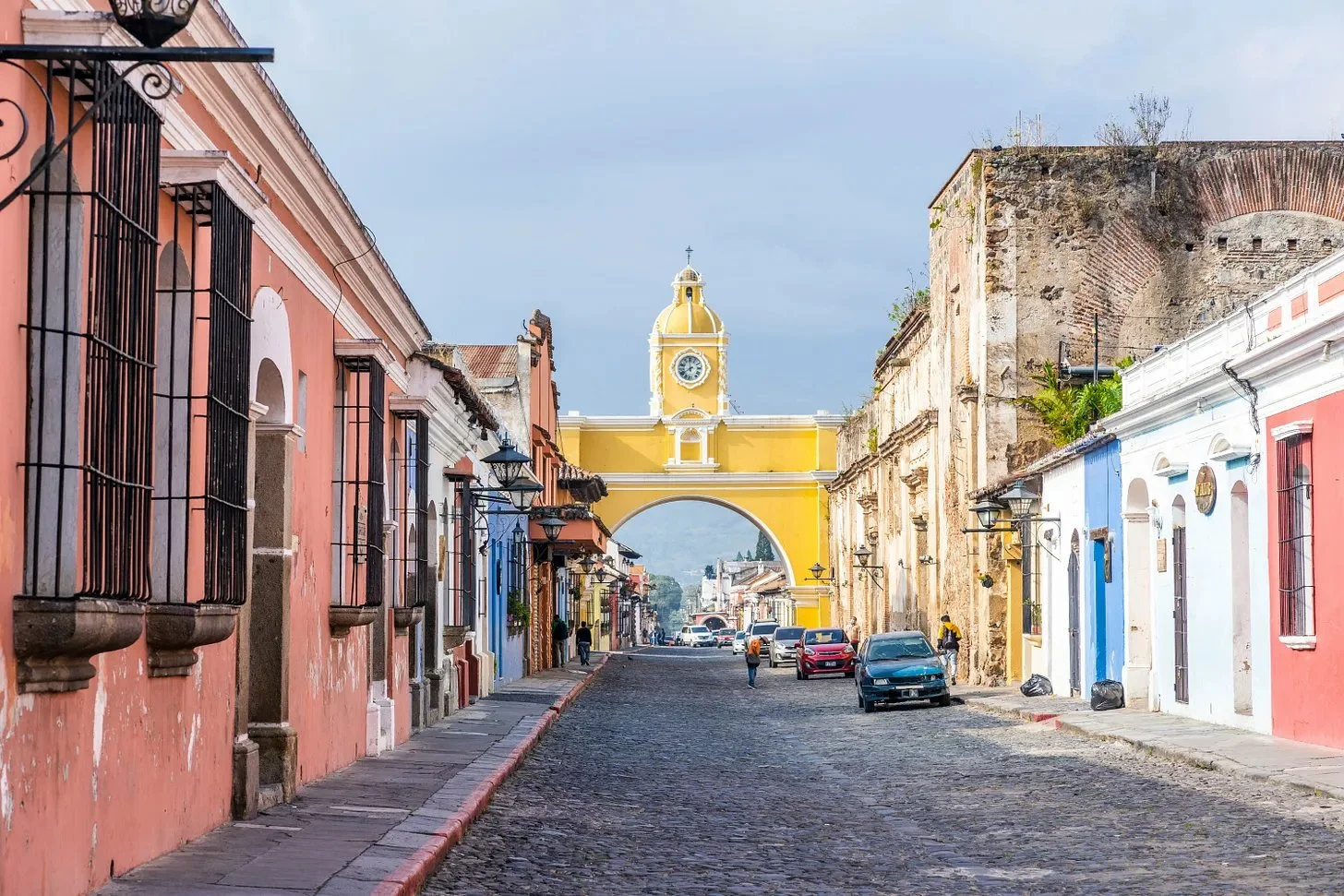
A Destination Guide for Guatemala
If this table has you curious about Guatemala—its artisans, its landscapes, its magic—you're not alone. In a recent article by Jennifer Barger on Substack I shared what keeps drawing me back to this remarkable country: the markets I can't stay away from, the artisans who've become friends, and the places that continue to inspire everything I create.
Whether you're planning your first trip or dreaming of one from afar, I hope it offers a glimpse into why Guatemala holds such a special place in my heart (and my work).
Read the full feature: [Just Back From Guatemala]