
The Art of the Arrival: Designing Foyers That Make a Statement
I once lived in an apartment where you walked straight into the kitchen. No threshold, no pause, no moment to arrive. Just the immediate hum of the most utilitarian room in the house.
It unsettled me more than I expected.
There is a reason for that. Our brains are constantly scanning for cues of safety and transition. Neuroscience tells us that the nervous system relies on subtle environmental signals like light, enclosure, and sequence to regulate how we feel in a space. When there is no clear boundary between outside and inside, the brain does not fully register that you have arrived. You stay, in a small but real way, on alert.
I felt it every time I opened the door.
So I created something that was not there.
An antique hat rack, placed just inside, became the first gesture. A lamp that I left on, always, so there was a quiet glow waiting for me. A small stool, nothing dramatic, just a place to sit and take off my shoes. It was not architecture. It was intention.
And it changed everything.
Frank Lloyd Wright believed that compression and release were essential to how we experience a home. The entry should gently guide you inward, creating a sense of arrival before revealing the space beyond. Even in a small apartment with no formal foyer, I realized you can create that same emotional sequence. You can give yourself a moment to land.
Now, when I think about entryways, I do not think about them as rooms. I think about them as transitions.
The best spaces do not just look a certain way. They make you feel a certain way. It is that instinctive sense of calm that happens before your eyes even settle on the details. You can feel the shift in energy the moment you cross the threshold.
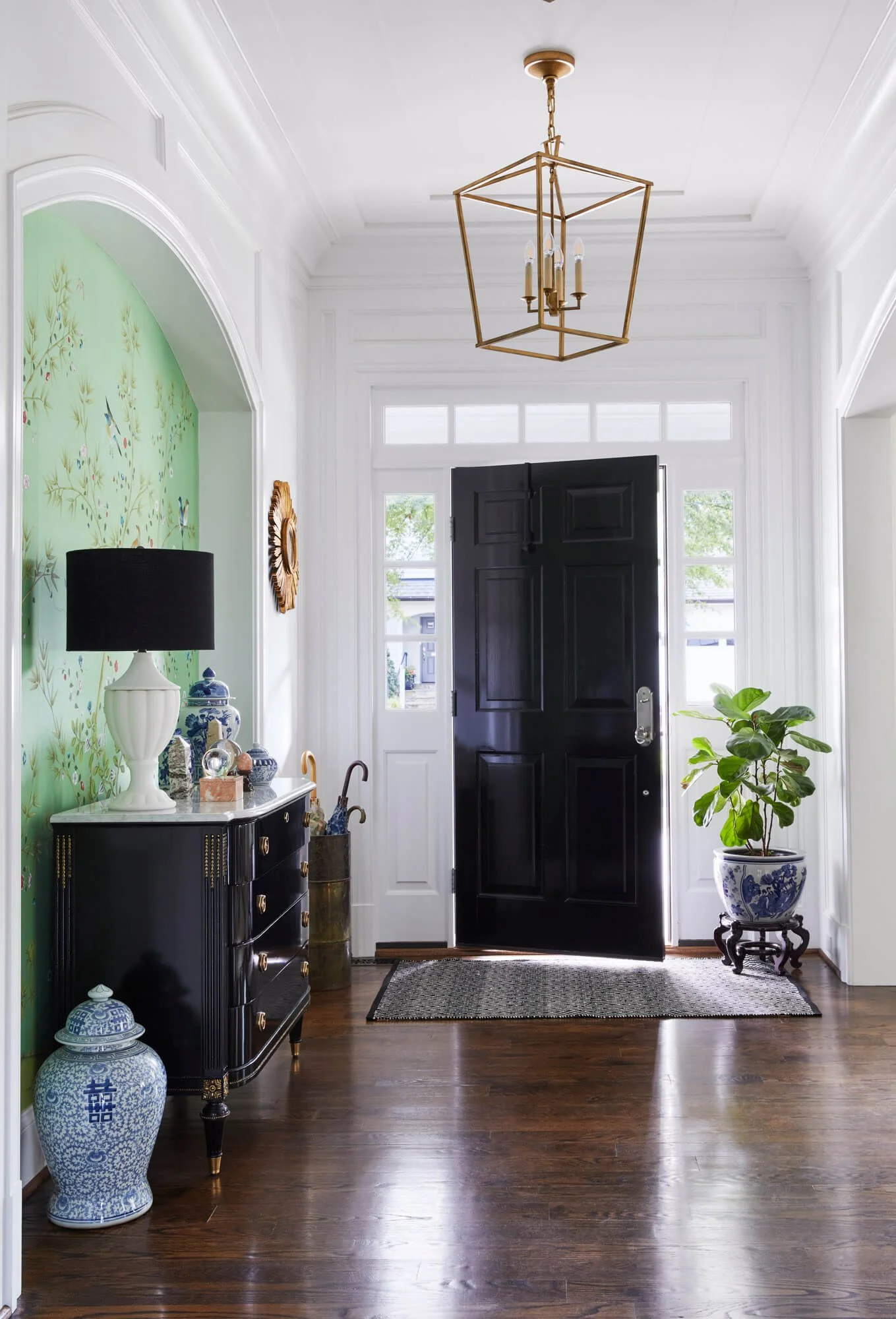
When I walk into a foyer, I see the opening chapter of a home. It tells you, immediately, how the rest of the story will unfold. It is where scale, lighting, and material begin to do their quiet work, moving you from the outside world into something more personal.
Architecture sets the stage. But it is the styling that gives it soul.
At RBI Interiors, we look past the physical dimensions of a space to find what it is trying to say. Through Decoration and Styling Services, we shape that first moment so it feels considered, grounded, and entirely your own.
Because a well designed entry is not about having a grand foyer. It is about creating a feeling.
A place to land. A place to exhale.
A place that welcomes you home before anything else does.
How a Space Should Feel
I have always believed a home should reflect the people living in it, because we experience space with our bodies before we ever process it visually. The materials, the light, the way things are arranged all register on a sensory level first, shaping how we feel, how we move, and even how we think. When a space is aligned with you, it supports you in a way that is almost invisible. When it is not, you feel that too.
I wrote about this last summer after the International Folk Art Market that touched on this: The Soul of a Space . What stayed with me was the difference between a space that is simply well designed and one that actually feels lived in and grounded. You can feel it right away. It is not about perfection. It is about presence.
When you walk through your front door, it should not feel staged. It should feel like you. Not in an obvious or literal way, but in a way your body recognizes before you even think about it.
That is where we start.
We are not chasing trends or filling space for the sake of it. We are looking for pieces that carry weight. Things that feel considered. Things that have a point of view.
For me, that almost always begins with the maker.
I am drawn to materials that feel alive. Ceramics that still hold the warmth of the kiln. Millwork that shows the hand behind it. Textiles that carry history in a way you can actually see and feel. Our handwoven pieces through RB Curated are a perfect example. They are not just decorative. They hold the time, skill, and rhythm of the weavers who made them.
These choices shape how a space lives. They are what turn a house into something that feels distinctly yours. When your environment reflects your perspective, your history, and what you are drawn to, it reinforces your sense of identity in a quiet but powerful way.
That connection matters more than people realize. When a space feels aligned with you, there is a kind of ease that settles in. You move through it differently. You feel more grounded, more at home in yourself. It creates a baseline of calm and confidence that carries into everything else.
It is not about having a perfect space. It is about having one that feels honest. One that supports you without asking anything in return.
That is where well being begins.
Even something as simple as a pillow can do that. The throw pillows we create are not just accents. They bring texture, depth, and a sense of origin into a room. They soften a space, but they also ground it. They make it feel finished in a way that is quiet, but clear.
That is what I am always after. A home that does not just look like you, but feels like you the moment you walk in.
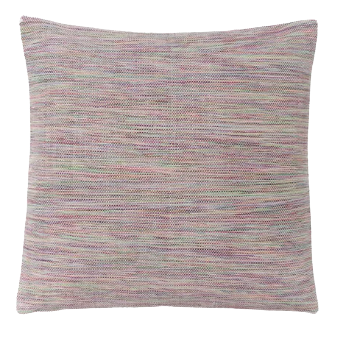
Mezclado Multicolor Throw Pillow
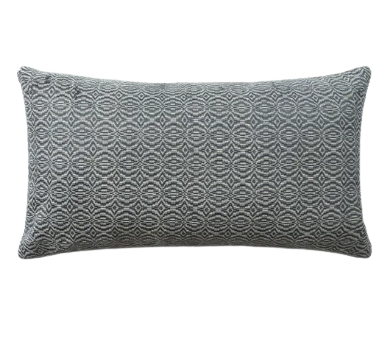
Óvalo Lumbar Pillow

Falseria Throw Pillow
When a space is deeply personal, it becomes timeless. It stops being a showroom and starts being the backdrop for your most significant moments.
The Psychology of Coming Home
I was drawn to Toby Israel’s work because I had already been thinking about home in a deeper way. It shows up everywhere if you pay attention. In art, in music, in films, in writing. The idea of home, missing home, not having one, or trying to create one. It is something people return to over and over again, which tells you how fundamental it is. Her work gave language and structure to something I was already noticing.
From there, I went deeper. I started researching the connection between neuroscience and design. How the brain reads space. How we respond to light, proportion, sequence, and material before we are even aware of it. It shifted how I see my work completely.
Now, this thinking is built into our process from the very beginning of every project.
Before we talk about furniture or finishes, we are asking different questions. How do you want to feel when you wake up in this space. What does coming home need to do for you. Where do you feel most like yourself. What do you need more of, and what do you need less of.
Because space should not be accidental. It should be intentional, purposeful, and deeply personal.
That is especially true at the point of arrival.
There is a real psychology to coming home. The moment you walk through the door, your environment is either asking your nervous system to stay on alert or allowing it to soften. When a space is aligned with you, it becomes a cue. A signal that you can let go of the outside world and settle back into yourself.
That is what we are designing for.
This is also where styling became an essential part of our work. Not as an afterthought, but as a way to complete the connection. The architecture creates the structure, but the styling is what personalizes it. It is where objects, materials, and details begin to reflect your story in a way that feels real.
We are not just placing things in a room. We are reinforcing a sense of identity.
When a space does that clearly, it does more than look beautiful. It supports you. It grounds you. It becomes a place that gives something back every time you walk in the door.
Creating an Intentional Welcome
If we want to move from just "decorating" to creating a sense of sanctuary, we have to look at the entry as more than just a pass-through. It’s about directing the eye and calming the senses. I find that most successful arrivals rely on three specific elements that anyone can use to ground a space.
The Anchor
Think of this as the "visual lead" of your home. Without a focal point, the eye tends to wander, which can create a subtle sense of unrest. You want to give the eye a place to land and stay. I usually look for a "hero" piece that sets the visual tone for the entire house. This could be a sculptural console table, a bold piece of art, or a rare vintage textile. The goal isn’t just to make a loud statement; it’s to establish what the home values most the second you walk in.
The Glow
If architecture provides the boundaries of a room, lighting is what provides the hospitality. One of the quickest ways to ruin a mood is with harsh overhead lighting. Instead, try to create "a glow." By using warm table lamps or a hand-crafted chandelier that casts soft, architectural shadows, you create a gentle transition. It’s a sensory cue that tells you it’s time to leave the noise of the outside world at the door and finally settle into comfort.
The Character of a Space
This is where I move away from filler decor and start thinking about what a space is actually saying. A room feels resolved when it carries some history, whether that is an artisan made object, a piece you sourced with intention, or something that clearly reflects the hand behind it. When you choose things with meaning, you are not just filling a surface, you are shaping how the space is experienced. It is these quieter, more intentional details that shift an entry from something you pass through into a place that feels grounded and entirely your own.
A Home That Supports You
Your home should give something back to you. It should create a sense of ease the moment you walk in and support how you want to live, not just how you want things to look.
If you are looking to bring more intention and depth into your space, let’s connect. Whether you are starting a new build or looking to layer in meaning through our styling services, you can reach out to our team here.