
Maker’s Mark: Why Custom is the New Luxury

I don’t think luxury was ever really about a label. To me, it has always been about something much harder to define: quality, craftsmanship, provenance, and the story behind the things we choose to live with.
What does feel different today is how easy it has become to imitate almost anything. Style can be generated with a click. Mass-produced pieces can be made to look aged, collected, or handmade. A room can look beautiful and still somehow feel completely flat.
What cannot be replicated is the human hand.
It is why I talk so much about the maker. I am drawn to pieces that carry evidence of the person who made them: the slight variations, the techniques learned over generations, the materials chosen with care, and the time it takes to make something well. There is an authenticity in those objects that simply cannot be manufactured.
For me, that is luxury. Not what something says to the world, but what it brings into a home. A sense of history. A connection to another person and place. A story that continues long after the object leaves the maker’s hands.
When we choose handcrafted over mass-produced, we are choosing more than an aesthetic. We are surrounding ourselves with things that have meaning, stories, and a connection to the people and places behind them. Those choices make our homes feel more personal, creating a deeper connection not only to the spaces we live in, but to ourselves and what we value.
Objects With Meaning
There are pieces that simply fill a space, and there are pieces that give it character. The difference is often subtle, but you feel it the moment you walk into a room.
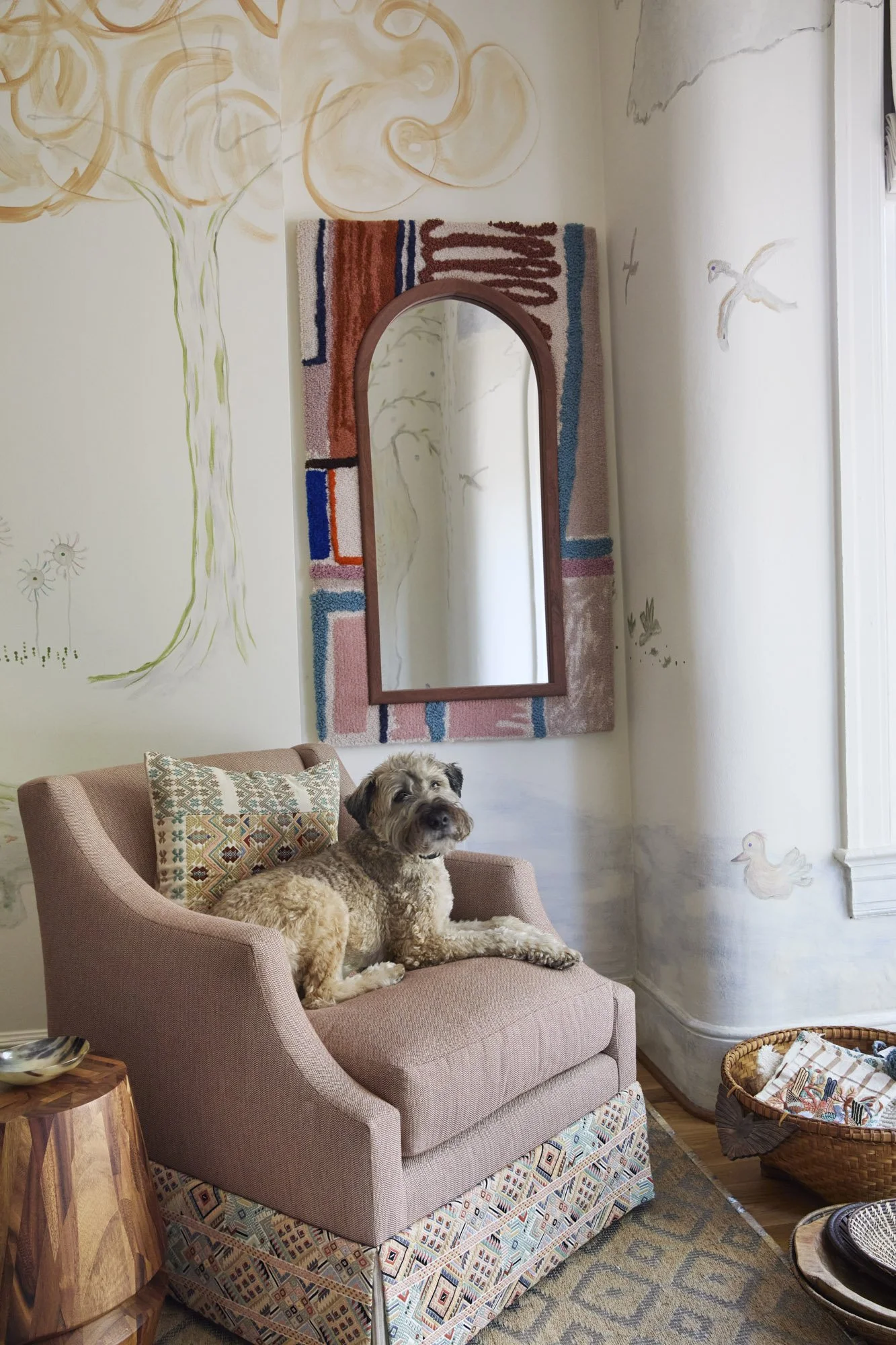
I am naturally drawn to objects that reveal how they were made. The irregularity of a handwoven textile, the marks left by a craftsman’s tools, the variations in a natural material. These are not imperfections to be corrected. They are evidence of the human hand and of traditions and techniques that, in many cases, have been passed down for generations.
That is what gives these pieces their depth. They bring something to a room that an object made by the thousands simply cannot.
It might be a hand-thrown ceramic bowl, a woven basket, a vintage piece of furniture, or a textile woven by hand. What makes these pieces special is not simply how they were made, but the story of where they came from and the people and traditions behind them.
I have always believed that knowing that story changes the way we live with an object. When you understand who made something, where it came from, and what went into making it, you value it differently. It becomes more than something you purchased to complete a room. It becomes something you want to live with, care for, and eventually pass on.
This is how a home begins to feel collected rather than decorated. The objects within it have meaning, and together they tell a story that is entirely your own.
But finding those pieces often requires looking beyond the conventional showroom. This is an important part of our design process and something we specialize in: sourcing from independent makers, artisans, galleries, vintage dealers, and small workshops to find pieces that bring individuality and meaning to a home. We layer those finds alongside more conventional furnishings, creating spaces that feel collected and personal rather than designed all at once.
The Search for Substance
We are often told that luxury is found on a showroom floor. But even the most beautiful retail spaces can feel a bit anonymous. They are often designed for the trend of the moment. They are built for the quick source rather than the slow create.
When we move toward the artisan custom, we are really looking for individuality. It is an intellectual and an emotional investment.
A truly individual home cannot be replicated because it is a reflection of the person who lives there. When you commission a piece of furniture or choose something made by hand, you are bringing something into your home that feels distinctly your own. The maker, materials, craftsmanship, and story behind it all contribute to that originality. Over time, these choices create a home that feels deeply personal, rather than one that could belong to anyone.
This is central to our design process. We begin by understanding how our clients live, what they value, and how they want to feel in their homes. From there, every choice becomes more intentional, from the way a room functions to the materials, furnishings, and objects we bring into it. We look beyond what is simply beautiful to find what feels personal, original, and right for the people who will live there.
The result is not only a home that reflects who our clients are, but one that makes their everyday lives better. It functions more intuitively, feels more connected to them, and creates an experience of home that is entirely their own.
Materials are an important part of creating that connection, and understanding where they come from is often where the story begins.